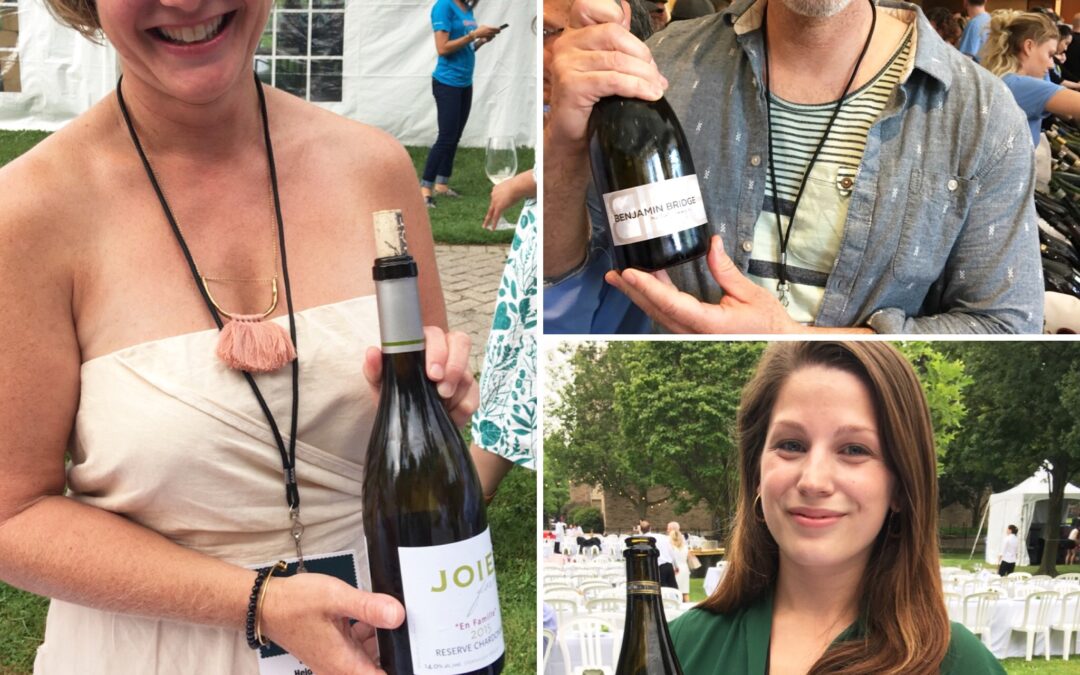
When a lot of people think about California, they think about bikinis. But when those of us who live here in wine country think about it, we think about down jackets. There are more than 700 miles of cold coastline stretching the length of the entire state. The effect...
Recently, I was in Ontario at the International Cool Climate Chardonnay CelebrationThe following content is accessible for members only, please sign in.
Recently, I was in Ontario at the International Cool Climate Chardonnay Celebration to give the keynoteThe following content is accessible for members only, please sign in.
I think about wine tastings the way I think about men. Some are pleasant. Some take work. Some you’ll never forget. Earlier this year, a 50th Anniversary tasting of the wines of Chappellet—going back to the legendary 1969– was more than an experience I’ll never...
Chardonnay is not one of the grape varieties permitted in white Bordeaux wine. Typically a blend of grapes, white Bordeaux is usually comprised of Sémillon, Sauvignon Blanc, and Muscadelle. Sauvignon Blanc is said to add a zesty liveliness, Sémillon adds weight and depth, and Muscadelle—not related to any grape varieties with Muscat in their names—adds a light floral character. A few more unusual suspects are authorized in Bordeaux, too, but for decades they have been used only in tiny amounts. They include Ugni Blanc, Colombard, Merlot Blanc (!), and Sauvignon Gris. Since 2021, Bordeaux has also allowed new varieties in Bordeaux blends including the white Portuguese variety Alvarinho (Albariño in Spain) and Liliorila, due to concern about climate change and rising temperatures. Alvarinho is resistant to grey rot and Liliorila (a French cross of Baroque and Chardonnay) is tolerant of very hot weather. Interesting that one of Liliorila’s “parents” is Chardonnay.